
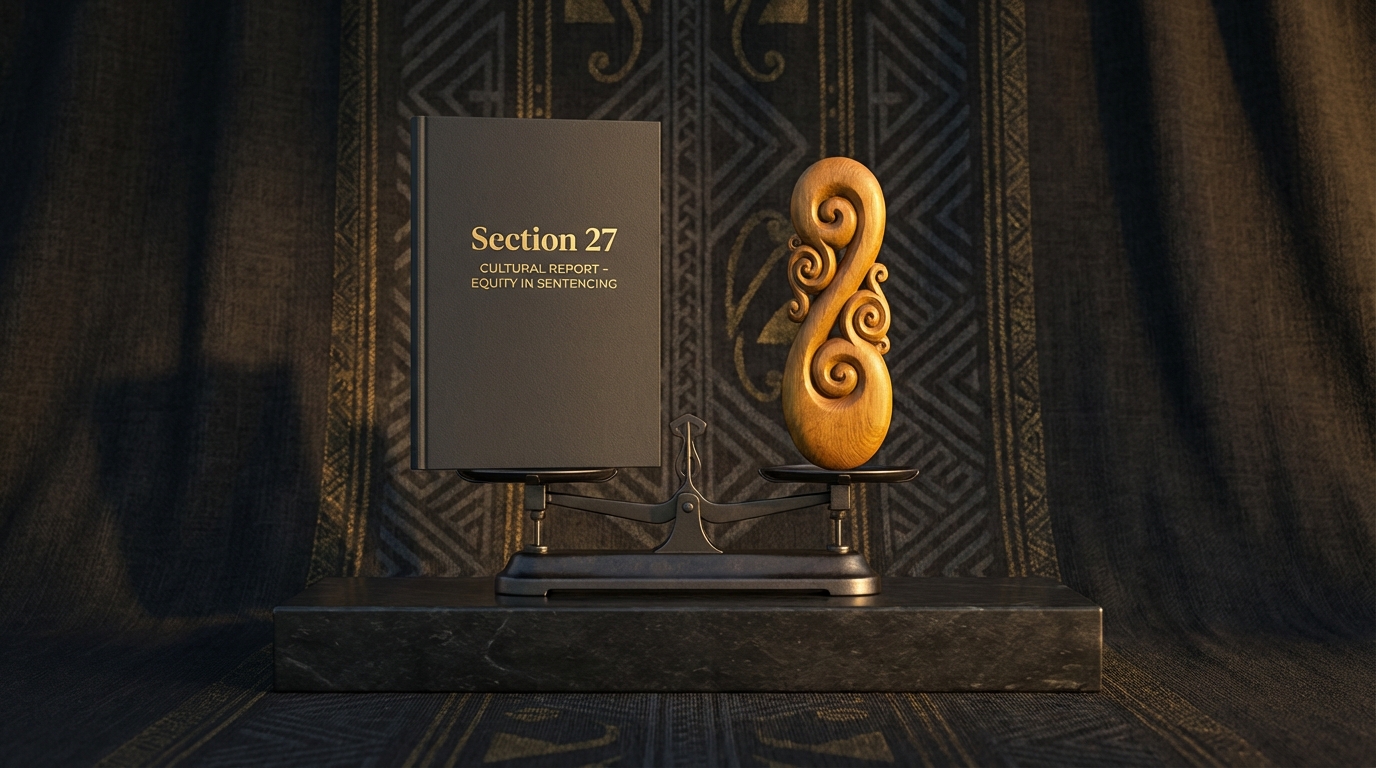
New Zealand faces a critical challenge: Māori and Pasifika peoples are disproportionately represented in the criminal justice system. Cultural reports under Section 27 of the Sentencing Act 2002 offer a powerful mechanism to address this disproportionality by ensuring courts understand the full cultural context of offending. This guide explores how cultural reports promote sentence equality and why they matter.
What Is Sentence Equality?
Sentence equality doesn't mean treating everyone identically—it means ensuring that sentencing decisions account for relevant differences in circumstances, background, and contributing factors. The principle recognizes that true fairness requires understanding why people offend, not just what offences they committed.
"In sentencing an offender, the court must take into account the offender's personal, family, whānau, community, and cultural background if it is relevant to the offence."
The Law of Disproportionality
The "law of disproportionality" refers to the well-documented pattern where Māori and Pasifika peoples are overrepresented at every stage of the criminal justice system—from arrest to imprisonment. This isn't just a statistical anomaly; it reflects systemic issues that cultural reports help courts address.
📊 Statistical Reality
While Māori comprise 17% of NZ's population, they represent 52% of the prison population. This disproportionality exists across all offence categories.
⚖️ Systemic Factors
Historical colonisation, socioeconomic disadvantage, and intergenerational trauma contribute to offending patterns that courts must understand.
🎯 Cultural Reports as Solution
Section 27 reports provide the cultural context courts need to make informed, equitable sentencing decisions that address root causes.
What Is a Section 27 Cultural Report?
A Section 27 cultural report is a specialized assessment prepared for sentencing proceedings that provides cultural context to an individual's background, identity, and the factors contributing to their offending. Unlike standard pre-sentence reports, cultural reports focus specifically on cultural identity and connection.
What Makes Cultural Reports Unique
Cultural reports are strengths-based and culturally grounded. They don't excuse offending—they explain it by connecting individual circumstances to broader cultural, historical, and social contexts that the court might otherwise miss.
These reports are explicitly designed for sentencing proceedings and are not available for parole hearings, where cultural considerations are integrated into AOD reports and risk assessments instead.
What Section 27 Cultural Reports Cover
- Whakapapa and cultural identity: Connection to iwi, hapū, and cultural heritage
- Whānau background: Family history, upbringing, and intergenerational experiences
- Cultural disconnection: Loss of cultural identity and its impact
- Historical factors: Colonisation, institutional experiences, systemic disadvantage
- Cultural strengths: Protective factors and cultural resources available
- Recommendations: Culturally appropriate interventions and sentencing options
"Cultural reports don't diminish accountability—they deepen the court's understanding of what accountability looks like in a bicultural context."
— Precision AOD SolutionsHow Cultural Investigations Work in NZ
A cultural investigation is a thorough process that goes beyond standard assessment methods. Here's what makes it different:
The Investigation Process
- Whānau consultation: Speaking with family members to understand cultural background and support networks
- Cultural context research: Examining historical and social factors relevant to the individual's experience
- Community engagement: Identifying cultural resources and support available in the community
- Strengths identification: Recognizing cultural capabilities and protective factors
- Collaborative approach: Working with cultural advisors where appropriate
⏱️ Timing Matters
Cultural reports typically take 2-3 weeks to complete due to the thorough consultation process. Plan ahead to ensure the report is ready for sentencing.
Why Cultural Reports Promote Sentence Equality
Cultural reports address disproportionality in several concrete ways:
🔍 Reveals Hidden Context
Many factors contributing to offending—cultural disconnection, historical trauma, systemic disadvantage—aren't visible without cultural investigation. Reports bring these to light.
🎯 Identifies Culturally Appropriate Solutions
Standard rehabilitation programmes may not work for everyone. Cultural reports identify interventions that align with the individual's cultural values and community.
📊 Provides Evidence for Sentencing
Rather than anecdotal claims, cultural reports provide documented evidence that courts can formally consider in sentencing decisions.
🤝 Connects to Community Resources
Reports identify cultural support networks and community programmes that can support rehabilitation and reduce reoffending.
Factors for Cultural Recommendations
What makes cultural report recommendations effective? Based on our experience, the strongest reports include:
Essential Elements
- Specific programme recommendations: Named cultural programmes with confirmed availability, not generic suggestions
- Community connections: Identified iwi organisations, marae, or cultural groups willing to support the individual
- Cultural rehabilitation pathways: Programmes that integrate cultural practices with offending behaviour work
- Whānau involvement: Family members willing to participate in rehabilitation and support
- Realistic implementation: Recommendations that are actually achievable given the individual's circumstances
Cultural Reports vs. Standard Pre-Sentence Reports
Understanding the difference is important:
Complementary, Not Competing
Cultural reports don't replace pre-sentence reports—they complement them. While pre-sentence reports focus on risk assessment and rehabilitation needs broadly, cultural reports provide the cultural context that makes those recommendations more effective.
In many cases, both reports are prepared together, giving the court a comprehensive picture of the individual's circumstances.

📋 Pre-Sentence Reports Focus On
Risk assessment, offence analysis, AOD issues, treatment recommendations, and general rehabilitation pathways.
🌿 Cultural Reports Focus On
Cultural identity, whakapapa, historical context, cultural disconnection, cultural strengths, and culturally appropriate interventions.
Who Can Request a Cultural Report?
Cultural reports are typically requested by:
- Defense lawyers: Most common route—your lawyer can commission a cultural report as part of your sentencing preparation
- The court: Judges may order cultural reports if they believe cultural factors are relevant to sentencing
- Individuals: You can arrange a cultural report independently, though legal guidance ensures it's used effectively
💡 Important Note
Cultural reports are only available for sentencing proceedings under Section 27. They are not used for parole hearings. For parole matters, cultural considerations are integrated into AOD reports and risk assessments instead.
Impact of Cultural Reports on Sentencing Outcomes
Research and practice show that cultural reports can influence sentencing in meaningful ways:
"Section 27 reports serve an important function in ensuring that sentencing decisions are informed by a proper understanding of the offender's cultural background and the factors that have shaped their life course."
Documented Benefits
- Increased likelihood of community-based sentences with cultural components
- Greater court awareness of cultural rehabilitation options
- Enhanced engagement with culturally appropriate interventions
- Improved perception of fairness in sentencing process
- Stronger connection between sentencing and rehabilitation
Cultural Reporting in Practice: What Courts Look For
Judges have become increasingly sophisticated in their use of cultural reports. Here's what they value:
✅ Authenticity
Reports that genuinely engage with cultural identity, not tokenistic references to culture
📊 Evidence-Based
Specific examples and documented cultural connections, not generalizations
🎯 Practical Recommendations
Actionable suggestions that the court can actually incorporate into sentences
🤝 Community Support
Evidence that cultural communities are willing and able to support rehabilitation
The Future of Sentence Equality in NZ
The push for sentence equality continues to gain momentum:
- Growing judicial recognition of cultural factors in sentencing
- Increased availability of culturally grounded rehabilitation programmes
- Strengthened legislative support for cultural considerations
- Greater investment in Māori and Pasifika-led justice initiatives
Cultural reports are at the forefront of this transformation, providing the evidence courts need to make sentencing decisions that are both fair and effective.
"Sentence equality isn't about lowering standards—it's about ensuring everyone has access to sentencing options that actually address the causes of their offending."
— Precision AOD SolutionsFrequently Asked Questions
How much does a cultural report cost?
Section 27 cultural reports do not qualify for legal aid funding. For private clients, costs vary based on complexity and the extent of whānau consultation required. Contact us for specific pricing. Cultural components are integrated into our AOD reports and risk assessments, which may qualify for legal aid and may be suitable alternatives.
Can cultural reports be used for parole?
No. Cultural reports under Section 27 are specifically for sentencing proceedings. For parole hearings, cultural considerations are integrated into AOD reports and risk assessments.
Do I have to be Māori to get a cultural report?
No. While most cultural reports are prepared for Māori defendants, any person can request a cultural report if their cultural background is relevant to their offending.
How long does a cultural report take?
Standard completion is 2-3 weeks, though complex cases requiring extensive whānau consultation may take longer.
Will a cultural report guarantee a lighter sentence?
No report guarantees a particular outcome. However, cultural reports provide the court with information that may support culturally appropriate sentencing options and rehabilitation pathways.
Expert Cultural Reports for NZ Courts
Precision AOD Solutions provides professional cultural reports that meet the highest standards for New Zealand courts. Our culturally responsive practice ensures every report is thorough, respectful, and actionable.
Why Choose Our Cultural Reports?
- Te reo Māori capability and understanding of tikanga
- Extensive experience with Section 27 reporting requirements
- Strong connections with iwi organisations and cultural communities
- Comprehensive whānau consultation process
- 98% court acceptance rate
Request a Cultural Report
Contact our team to discuss your cultural report needs. We'll explain the process, timeline, and how we can support your sentencing preparation.