
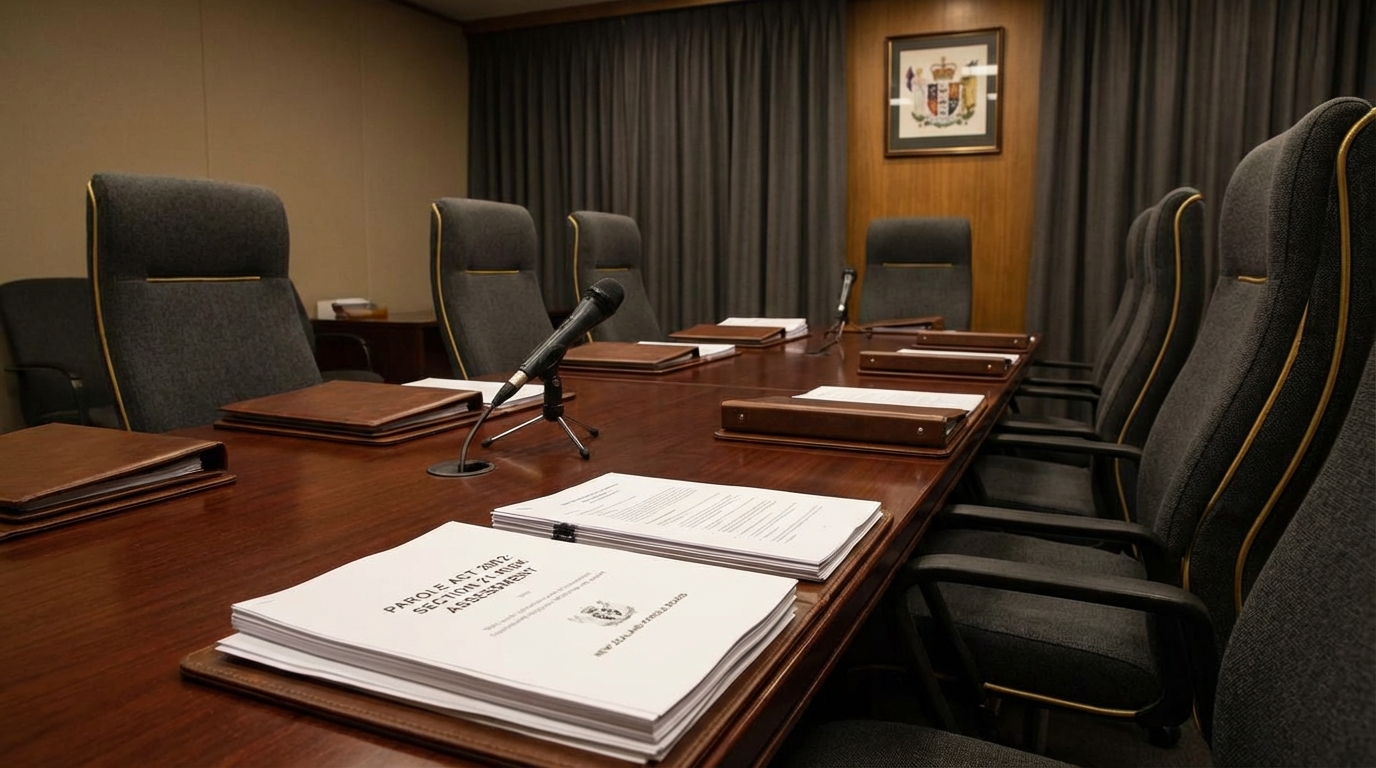
If you or someone you care about is facing a parole hearing, understanding how the Parole Board makes decisions is critical. This guide provides an insider's look at the decision-making process, what factors carry the most weight, and how AOD reports influence parole outcomes in New Zealand.
What Is the NZ Parole Board?
The New Zealand Parole Board is an independent statutory body responsible for deciding whether eligible prisoners should be released on parole. Established under the Parole Act 2002, the Board operates separately from the courts and the Department of Corrections, ensuring impartial decision-making.
How the Board Operates
- Decisions are made by panels of three members
- Panels include at least one judicial member (judge or lawyer)
- Members have expertise in psychology, Māori affairs, rehabilitation, and community safety
- Decisions are based on written reports—most hearings don't involve the prisoner appearing in person
How Does the Parole Board Make Decisions?
The Parole Board's primary consideration is always community safety. Before granting parole, the Board must be satisfied that release won't pose an undue risk. Here's the decision-making framework:
"When making decisions about, or in any way relating to, the release of an offender, the paramount consideration for the Board in every case is the safety of the community."
The Decision-Making Process
📋 Step 1: Dossier Preparation
Corrections compiles a comprehensive dossier including all relevant reports, prison records, and rehabilitation progress—typically 12+ documents.
🔍 Step 2: Report Review
Panel members independently review all reports, paying particular attention to risk assessments, AOD reports, and evidence of rehabilitation.
⚖️ Step 3: Risk Assessment
The Board evaluates reoffending risk using validated instruments (RoC*RoI, VRS) and professional assessments to determine release readiness.
🎯 Step 4: Decision
Panel deliberates and makes a decision based on evidence. Decisions can be: release granted, release deferred, or release declined.
"The Parole Board doesn't ask 'Has this person served enough time?'—they ask 'Is this person safe to release, and what conditions will manage any remaining risk?'"
— Precision AOD SolutionsWhat Factors Does the Parole Board Consider?
The Board considers a wide range of factors, but some carry significantly more weight than others:
Highest Weight Factors
Risk assessment results, AOD reports, and evidence of rehabilitation engagement are among the most influential factors. The Board wants to see concrete evidence that you've addressed the underlying issues that led to your imprisonment.
Complete Factor List (In Order of Weight)
- Risk assessment scores: RoC*RoI, VRS, and other validated instruments
- AOD reports: Comprehensive assessments of substance use and treatment progress
- Rehabilitation programme completion: Evidence of engaging with and completing relevant programmes
- Prison conduct: Disciplinary record, behaviour, and participation in prison activities
- Release plan: Accommodation, employment, and support network arrangements
- Victim impact: Statements from victims and consideration of their safety concerns
- Psychiatric/psychological reports: Mental health assessments and treatment progress
- Cultural reports: Where relevant, cultural context and community connections
How AOD Reports Influence Parole Decisions
AOD reports are among the most critical documents the Parole Board reviews, particularly for offences where substance use was a factor. Here's why:
What the Board Looks For in AOD Reports
- Treatment engagement: Have you actively participated in AOD programmes during imprisonment?
- Progress made: What measurable improvement have you shown in addressing substance use?
- Relapse risk: What's your likelihood of returning to problematic substance use post-release?
- Release conditions: What AOD-related conditions should be imposed (testing, treatment, etc.)?
- Support network: Do you have people and resources in the community to support your recovery?
💡 Critical Insight
The Parole Board doesn't expect perfection. They want to see genuine engagement, honest self-assessment, and a realistic plan for managing substance use in the community. A strong AOD report demonstrates all three.
How AOD Reports Are Weighted
A comprehensive, professionally prepared AOD report from a recognized assessor carries significant weight. The Board particularly values reports that:
📊 Use Validated Tools
Reports using instruments like the VRS (Violence Risk Scale) and RoC*RoI calibrated for NZ populations are given greater credibility.
🎯 Provide Specific Recommendations
Vague suggestions like "continue treatment" are less useful than specific programme recommendations with confirmed availability.
🔍 Address Both Risk and Protective Factors
The best reports don't just identify problems—they highlight strengths and protective factors that support successful release.
Common Reasons Parole Is Denied
Understanding why parole applications fail can help you prepare a stronger case:
Top Reasons for Parole Decline
- Insufficient rehabilitation evidence: Not enough engagement with programmes addressing offending behaviour
- High reoffending risk: Risk assessment scores indicate significant likelihood of reoffending
- Unaddressed AOD issues: Substance use problems not adequately addressed during imprisonment
- Weak release plan: No stable accommodation, employment prospects, or support network
- Poor prison conduct: Disciplinary issues or programme non-compliance
- Victim safety concerns: Legitimate fears about victim safety if released
What Happens at a Parole Hearing?
Most parole decisions are made on the papers—meaning the panel reviews reports without a formal hearing. However, in some cases, hearings are held:
When Hearings Occur
- First-time parole eligibility for serious offences
- Complex cases requiring additional clarification
- When the prisoner requests to appear
- When victims wish to make submissions
What to Expect If You Attend
If you're required to appear at a parole hearing:
- The panel will ask questions about your rehabilitation progress
- You'll be asked about your release plan and how you'll manage risk factors
- Questions about substance use and treatment engagement are common
- The hearing typically lasts 30-60 minutes
- Decisions are usually communicated within 24-48 hours
"The most successful parole applicants are those who can honestly discuss their past, demonstrate what they've learned, and articulate a realistic plan for the future."
— Precision AOD SolutionsHow to Improve Your Chances of Parole
Based on our experience with hundreds of parole cases, here's what works:
✅ Complete Relevant Programmes
Prioritize programmes that directly address your offending behaviour, especially AOD treatment if substance use was a factor.
📄 Commission an Independent AOD Report
An independent AOD assessment can provide the Board with additional evidence of your rehabilitation progress beyond Corrections reports.
🏠 Develop a Strong Release Plan
Secure stable accommodation, identify employment prospects, and build a support network before your hearing.
🤝 Maintain Good Prison Conduct
A clean disciplinary record demonstrates you can comply with rules and manage your behaviour.
Parole Board Decisions: Recent Trends
Recent parole decisions show several important trends:
- Increased emphasis on AOD reports: The Board is placing greater weight on comprehensive substance use assessments
- Stricter scrutiny of release plans: Vague plans are being rejected more frequently
- Greater focus on victim safety: Victim impact statements are receiving more consideration
- Cultural considerations: Cultural reports and connections to community are increasingly valued
In practice, boards look for concrete evidence of rehabilitation rather than programme attendance alone, and expect offenders to articulate what they have learned and how they will apply it post-release.
For the full picture of what happens after the panel retires — release windows, notification rules, recall and review rights, and where outcome statistics are published — see our guide to NZ Parole Board decisions and what happens next.
Frequently Asked Questions
How long does a parole hearing take?
Parole hearings typically last 30-60 minutes. However, most decisions are made on the papers without a hearing, which can take several weeks from dossier submission to decision.
Can I see the reports the Board considers?
Yes. You and your lawyer have access to the full dossier before the hearing. Review it carefully to understand what the Board will consider.
What happens if parole is denied?
The Board will specify when you can reapply—typically 6 months to 2 years later. Use this time to address the reasons for denial (complete programmes, improve release plan, etc.).
Do AOD reports guarantee parole?
No. While strong AOD reports significantly improve your chances, parole decisions consider multiple factors. AOD reports are one important piece of the puzzle.
Can I get an independent AOD report for parole?
Yes. Independent AOD reports can supplement Corrections reports and provide additional evidence of rehabilitation. Many successful parole applicants commission independent assessments.
Expert Parole AOD Reports
Precision AOD Solutions specializes in comprehensive parole AOD reports accepted by the New Zealand Parole Board. Our assessments provide the evidence the Board needs to make informed release decisions.
Why Choose Our Parole AOD Reports?
- Specialized expertise in parole assessment requirements
- Validated risk assessment instruments calibrated for NZ populations
- AVL interviews available across 13 prison networks
- Standard report delivery within 10-15 business days from funding approval
- 95% acceptance rate by the Parole Board
Prepare for Your Parole Hearing
Contact us to discuss your parole AOD assessment needs. We'll work with you to produce a comprehensive report that demonstrates your rehabilitation progress and release readiness.