

If you've been referred for a forensic psychological assessment in preparation for a Parole Board hearing, you may have questions about what the process involves. This comprehensive guide demystifies the assessment protocol and explains your rights.
Key Takeaways
- Assessments typically involve 6 sessions over approximately 6 hours
- AVL (Audio-Visual Link) interviews are available nationwide for incarcerated clients
- You have rights under the Privacy Act 2020 including access to your report
- Psychometric testing is standard and includes personality and risk assessment tools
- Honest engagement improves assessment accuracy and treatment recommendations
"Authentic engagement produces assessments that accurately identify your needs and lead to appropriate treatment recommendations."
� Precision AOD SolutionsPre-Assessment: Consent, Rights, and Privacy
Before any assessment begins, you will be provided with information about the process and asked to provide informed consent. This ensures you understand:
📌 Purpose & Access
Clear explanation of assessment purpose and who will have access to the report (Parole Board, Corrections, legal counsel).
📌 Privacy Rights
Your rights under the Privacy Act 2020, including access to your report and ability to request corrections.
📌 Confidentiality Limits
Understanding the limits of confidentiality in forensic contexts and how information will be disclosed.
You have the right to access information held about you, including your forensic assessment report. You may request corrections to any factual inaccuracies. Reports are held securely and disclosed only to authorized parties.
The AVL Interview: Remote Assessment Technology
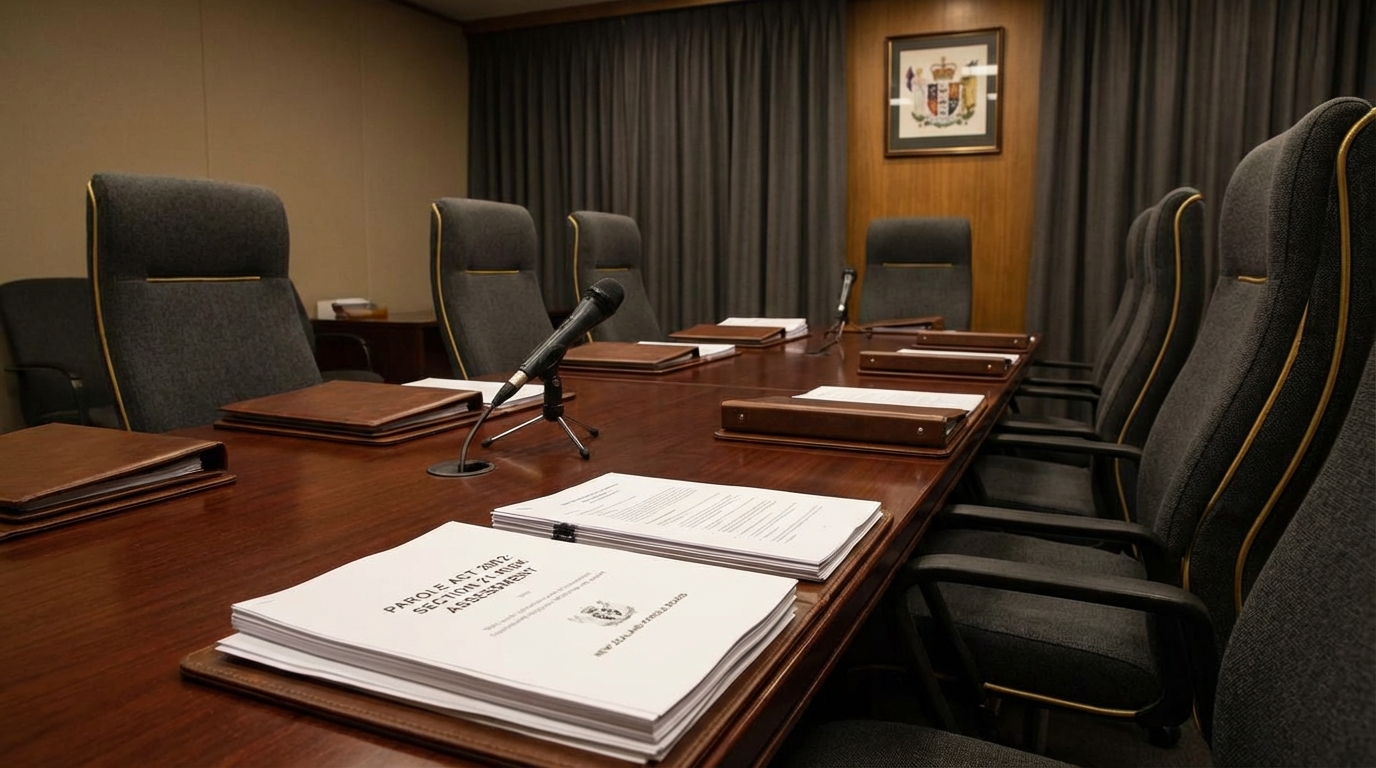
Many Section 21 parole risk assessments are conducted via Audio-Visual Link (AVL) technology, enabling access to specialist forensic psychologists regardless of your prison location.
Secure Technology
AVL interviews are conducted in private interview rooms at your facility with secure, encrypted connections compliant with Corrections IT standards. Technical arrangements are coordinated with prison staff to ensure privacy and quality.
AVL Features
- Secure, encrypted connections compliant with Corrections IT standards
- Privacy during interview sessions
- Recording capabilities for quality assurance (with consent)
- Flexible scheduling around prison operational requirements
Psychometric Testing: MCMI-IV and Risk Assessment
Psychometric testing is a standard component of forensic psychological assessment. Our standard battery includes validated instruments specifically selected for forensic populations:
📌 MCMI-IV
Comprehensive personality assessment evaluating personality patterns, antisocial features, substance dependence, and major mental health conditions. 195 questions, 25-30 minutes.
📌 Risk Instruments
VRS (Violence Risk Scale) and LS/CMI (Level of Service/Case Management Inventory) assess specific risk factors and treatment needs for parole evaluation.
Answer honestly � psychometric instruments include validity scales that detect inconsistent or socially desirable responding. Attempting to present a false impression will likely be detected.
The Clinical Interview: 6-Session Protocol
The clinical interview forms the heart of the assessment. Over multiple sessions, the psychologist will explore your history, offenses, and rehabilitation:
Introduction & Rapport Building
Establishing therapeutic rapport, explaining the assessment process, and addressing initial concerns or questions.
Developmental History
Exploring childhood experiences, family dynamics, education history, and early life circumstances contributing to offending patterns.
Offense Analysis
Detailed examination of current and previous offenses, including thoughts, emotions, and circumstances surrounding each incident.
Substance Use & Mental Health
Comprehensive assessment of alcohol and drug use patterns, mental health history, and treatment engagement.
Protective Factors & Future Planning
Discussion of strengths, support systems, employment goals, and plans for community reintegration.
Closure & Additional Testing
Completing any remaining assessments, summarizing key themes, and discussing next steps.
Report Delivery: Timeline and Access
Following completion of all assessment sessions, the psychologist follows a rigorous process:
Review Collateral Information
Police summaries, previous reports, prison case notes, treatment records.
Score Psychometric Instruments
Analyze test results in context of clinical formulation.
Develop Clinical Formulation
Integrate all data into a coherent risk narrative with recommendations.
Write Report & Quality Assurance
Typically 8-15 pages with specific recommendations. Internal review before release.
Report Distribution
- Referring party (Corrections case manager or legal counsel)
- Parole Board for hearing consideration
- You (upon request through appropriate channels)
How to Prepare for Your Assessment
While you cannot "study" for a forensic assessment, you can prepare by:
📌 Reflect on History
Consider key life events, turning points, and patterns in your behavior.
📌 Gather Documentation
Treatment completion certificates, education records, employment history.
📌 Identify Support Systems
Whanau connections, community support, employment prospects.
📌 Consider Your Goals
What you want to achieve on parole and how you plan to maintain change.
Frequently Asked Questions
How long does the assessment take?
Our standard protocol involves approximately 6 hours of direct clinical contact across 6 sessions, plus collateral review and report writing. Total turnaround is typically 4-6 weeks.
Can I refuse to participate?
You can decline specific questions or withdraw. However, this may result in an incomplete opinion affecting Parole Board decision-making. Non-participation will be noted in the report.
Who sees my report?
Reports are provided to the referring party (Corrections) and the Parole Board. You may request a copy through Official Information Act channels.
What if I disagree with the report?
You have the right to request factual corrections under the Privacy Act 2020. Concerns about clinical opinions can be raised with your case manager or legal counsel.
What does a forensic psychologist assess for parole?
The assessment examines offence pathways, treatment response, current risk factors and protective factors, then applies structured professional judgement to estimate reoffending risk and identify the conditions needed for safe release.
How is a forensic assessment different from a counsellor's letter?
A forensic assessment uses validated instruments, reviews full records and tests competing explanations, whereas a counsellor's letter usually reflects engagement alone. The Board gives greatest weight to forensically rigorous, independently prepared evidence.
Treatment Engagement: A Key Protective Factor
Treatment engagement is particularly important. If you have participated in programmes, be prepared to discuss what you learned and how you've applied new skills:
Programme Examples
- Drug Treatment Programme (DTP)
- Te Tirohanga or MIRP cultural programmes
- Anger management or violence prevention programmes
- Education or vocational training
Need a Forensic Psychological Assessment?
Our Board Registered Clinical Psychologists provide comprehensive Section 21 parole risk assessments with nationwide AVL availability.