
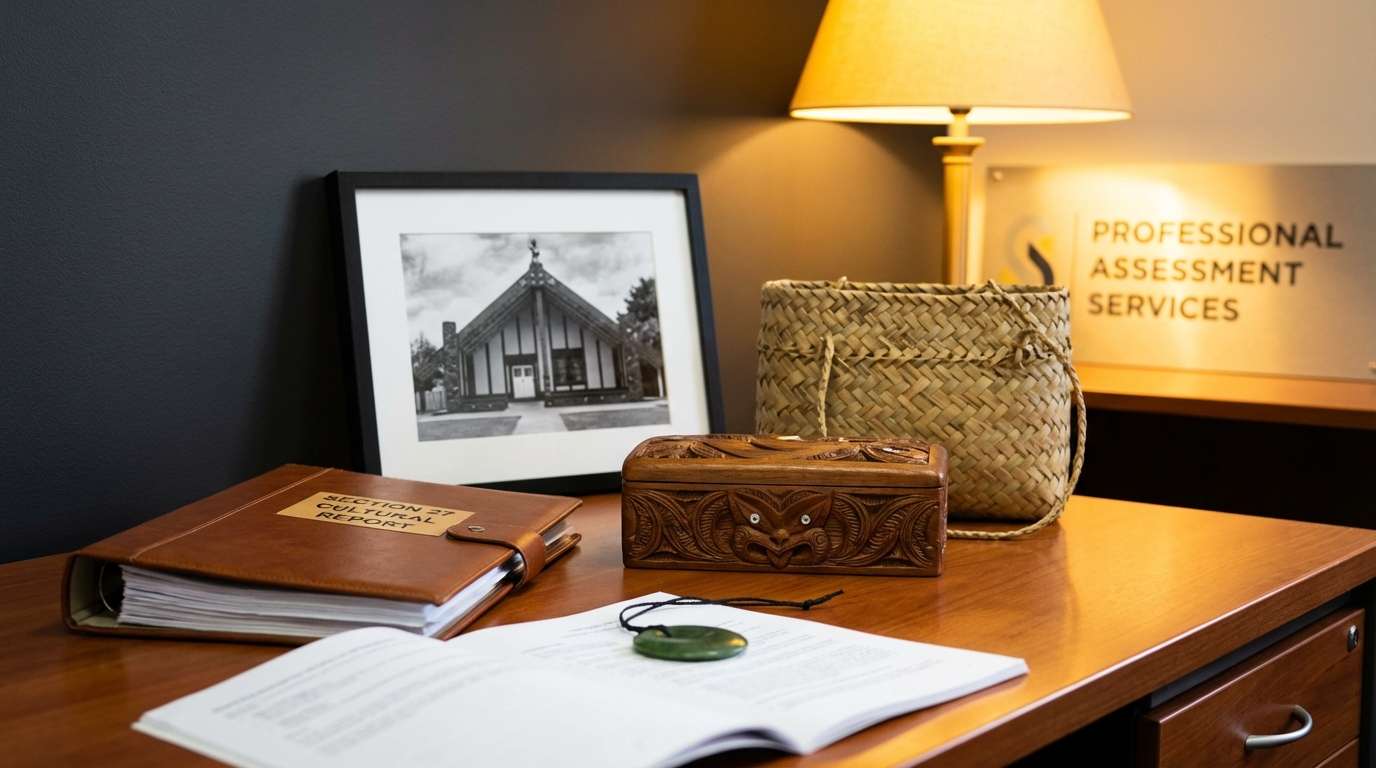
New Zealand's justice system recognizes that cultural background significantly influences how individuals experience the law, respond to offending, and engage with rehabilitation. Section 27 cultural reports play a crucial role in achieving sentence equality. For the wider legal framework, our guide to sentence equality and Section 27 reports in NZ explains how the pieces fit together. If you are new to these reports, our explainer covers the cultural investigation itself — what it examines and how it reaches the court.
"Cultural reports ensure that culturally influenced mitigating factors are properly considered, leading to fairer and more effective sentencing outcomes."
� Precision AOD SolutionsThe Legal Basis for Cultural Reports
Section 27 of the Sentencing Act 2002 provides the statutory framework for cultural reports in sentencing: it lets an offender call a person to speak to their personal, family, whānau, community and cultural background, and how that background relates to the offending.
"If an offender appears before a court for sentencing, the offender may request the court to hear any person or persons called by the offender to speak on (a) the personal, family, whanau, community, and cultural background of the offender; and (b) the way in which that background may have related to the commission of the offence."
How Cultural Factors Influence Sentencing
Cultural reports help courts understand how cultural context intersects with criminal behavior and rehabilitation:
📜 Historical Trauma
Many Maori and Pasifika offenders carry impacts of colonization, forced migration, and cultural disconnection that contribute to offending patterns.
Cultural Responses
Indigenous justice paradigms emphasize restoration and community healing over punishment, aligning with tikanga Maori approaches.
👨👩👧👦 Whānau Context
Cultural assessments consider the role of whanau, hapu, and iwi in both causes of offending and solutions for rehabilitation.
"A court must take into account any particular circumstances of the offender that mean that a sentence would be disproportionately severe, including... the offender's cultural background."
The Cultural Report Assessment Process
A comprehensive cultural report involves several key phases:
Cultural Consultation
Working with kaumatua, kuia, or cultural experts to understand whakapapa, cultural identity, and community standing.
Whanau Engagement
Involving family members to provide context about cultural upbringing, values, and support systems.
Cultural Context Analysis
Examining how cultural factors may have contributed to offending and identifying appropriate cultural responses.
Rehabilitation Planning
Developing culturally appropriate treatment and reintegration strategies aligned with cultural values.
Report Integration
Combining cultural insights with AOD and psychological assessments for holistic recommendations.
Achieving Sentence Equality
Cultural reports promote sentence equality by ensuring culturally influenced mitigating factors are properly considered:
Reducing Cultural Bias
Reports help courts recognize when standard sentencing approaches may disadvantage offenders from minority cultural backgrounds, leading to more equitable outcomes and addressing systemic inequities in the justice system.

Equality Mechanisms
- Recognition of cultural mitigating factors
- Alternative community-based sentencing options
- Restorative justice processes
- Culturally appropriate sanctions
- Addressing systemic over-representation
Success Stories
📌 Maori Youth: Cultural Context Considered
A 19-year-old Maori man faced serious charges related to family violence and alcohol abuse. The cultural report revealed intergenerational trauma from historical land losses and cultural disconnection. The court considered the cultural context in imposing a community-based sentence incorporating Maori AOD treatment and whanau conferencing, resulting in successful rehabilitation and family reunification.
📌 Pasifika Restorative Justice
A Samoan defendant charged with aggravated robbery received a cultural report highlighting fa'asamoa (Samoan cultural values) in rehabilitation. The court adopted recommendations for fale (family meetings) and church-based support, resulting in community work and cultural supervision rather than imprisonment.
📌 Integrated Cultural-AOD Approach
A young Maori woman with methamphetamine dependence faced serious driving charges. The integrated cultural-AOD report identified both substance use issues and cultural disconnection. The court imposed a therapeutic sentence combining kaupapa Maori AOD treatment with cultural reconnection programs, leading to sustained recovery.
Evidence-Based Outcomes
Research demonstrates the effectiveness of cultural reports in achieving better justice outcomes:
📌 Rehabilitation Focus
Culturally informed sentencing approaches may support rehabilitation and community reintegration.
? Improved Rehabilitation
Cultural approaches enhance treatment engagement and completion rates significantly.
📌 Community Benefits
Restorative approaches strengthen community ties and support systems for long-term success.
📌 Cost Effective
Community-based cultural sentences are often more cost-effective than imprisonment.
"Cultural reports contribute to more effective sentencing by ensuring that cultural factors are properly considered, leading to better outcomes for Maori and Pasifika offenders."
Integration with AOD Assessments
Cultural reports often intersect with AOD issues, requiring integrated assessments:
Integrated Approach Benefits
- Culturally appropriate AOD treatment recommendations
- Kaupapa Maori and Pacific cultural treatment modalities
- Holistic rehabilitation considering cultural reconnection
- Family and community involvement in treatment
- Enhanced treatment engagement and completion
Professional Standards
Cultural reports must meet rigorous professional and cultural competence standards:
Quality Requirements
- Prepared by kaumatua, kuia, or qualified cultural experts
- Appropriate cultural knowledge and experience
- Peer review for cultural accuracy and clinical validity
- Respect for cultural protocols and confidentiality
- Avoidance of cultural stereotyping or bias
Choosing Cultural Report Services
What to Look For
- Qualified practitioners with deep cultural knowledge
- Ability to combine cultural with AOD assessments
- Proven track record of judicial acceptance
- Commitment to whanau and community involvement
- Adherence to professional and cultural standards
At Precision AOD Solutions, we provide integrated cultural and AOD assessments that help courts achieve sentence equality through culturally informed decision-making. Our bicultural team combines clinical expertise with deep cultural understanding.
Need a Cultural Report for Sentencing?
Contact us today for culturally competent assessments that achieve sentence equality and support rehabilitation.