
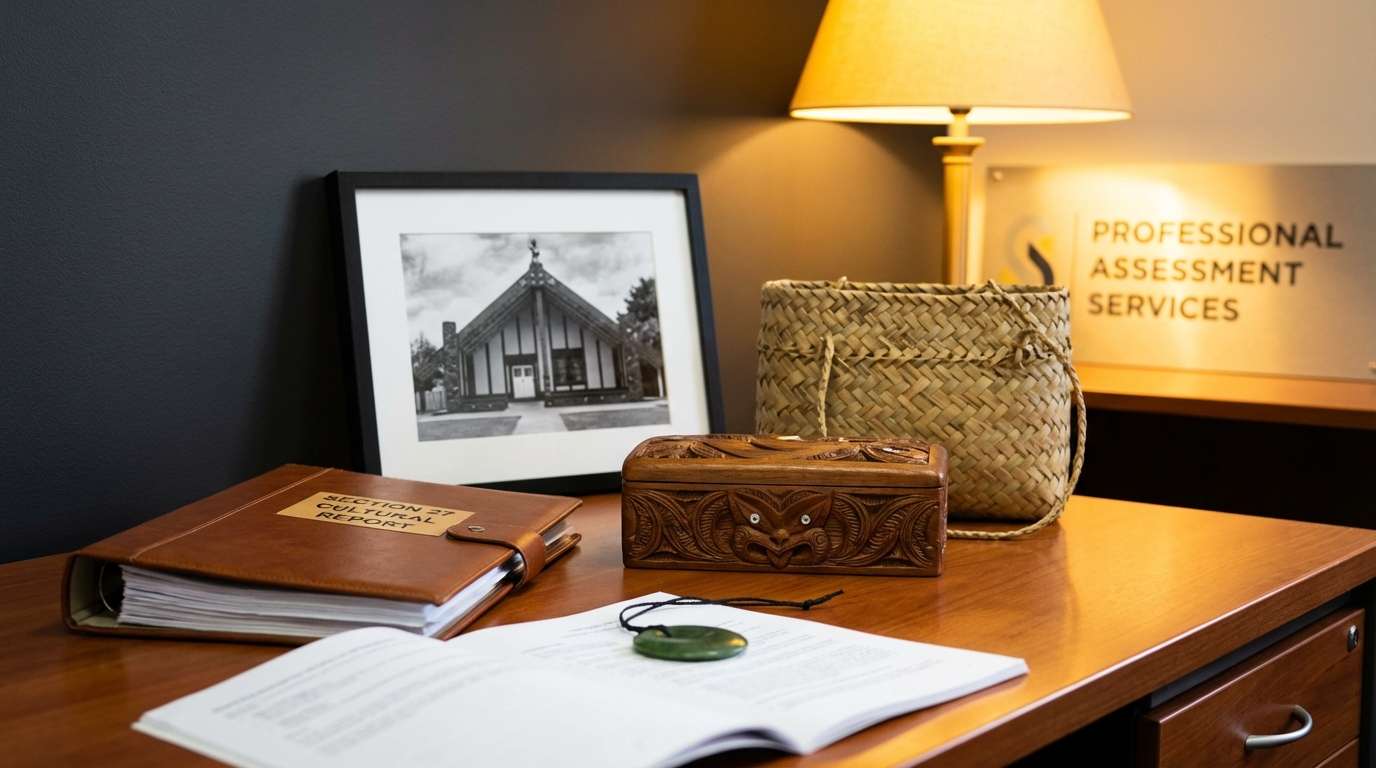
Maori are significantly overrepresented in the New Zealand criminal justice system, making culturally informed forensic assessment essential for equitable risk evaluation. Understanding how cultural identity, whakapapa (genealogy), and cultural disconnectedness influence offending behavior enables more accurate risk formulation.
Key Takeaways
- Cultural disconnectedness is recognized as a criminogenic need in NZ forensic assessment
- Whakapapa and iwi connections provide protective factors against reoffending
- Te Tirohanga and MIRP programmes offer culturally responsive rehabilitation
- Balancing cultural context with risk evaluation requires specialized expertise
- Section 27 cultural reports complement forensic psychological assessment
"Whakapapa assessment goes beyond identifying iwi affiliation to understand the depth of cultural connection and its protective influence."
� Precision AOD SolutionsWhakapapa and Risk Assessment: Beyond Demographics
At Precision AOD Solutions, our Section 21 parole risk assessments integrate cultural factors at a clinical formulation level, not merely as demographic variables. This means exploring how cultural identity, whanau dynamics, and connection to tikanga Maori influence an individual's risk and protective factor profile.
Whanau Connection
Strength of connection to whanau, hapu, and iwi provides insight into support systems and cultural grounding.
Cultural Knowledge
Participation in tikanga Maori and understanding of cultural practices as protective factors.
Language & Identity
Te reo Maori proficiency and cultural identity as indicators of resilience and community connection.
Cultural Disconnectedness as a Criminogenic Need
Research in New Zealand forensic psychology has identified cultural disconnectedness as a significant criminogenic need�a dynamic risk factor that can be addressed through targeted intervention.
Impact of Disconnection
Loss of cultural identity, language, and connection to whakapapa can contribute to feelings of alienation, low self-worth, and disengagement from prosocial cultural values. This disconnection is particularly relevant for Maori offenders who may have experienced forced assimilation or urban migration.
Risk Factors
- Loss of cultural identity and language
- Disconnection from whakapapa and iwi
- Urban migration and loss of tribal connections
- Intergenerational trauma from colonization
- Systemic disadvantage and marginalization
Cultural Protective Factors
Strong cultural connection serves as a powerful protective factor against reoffending:
Whakapapa Grounding
Clear understanding of genealogical connections provides identity, belonging, and accountability to whanau and hapu.
Tikanga Practice
Engagement with Maori customs and protocols reinforces prosocial values and community expectations.
Te Reo Maori
Language proficiency enables deeper cultural understanding and connection to Maori knowledge systems.
Marae Involvement
Active participation in marae-based activities provides community support and cultural continuity.
Culturally Responsive Rehabilitation Programmes
New Zealand offers several evidence-based programmes that integrate cultural healing with risk reduction:
Te Tirohanga
Specialized Maori-focused treatment programme addressing both AOD issues and cultural reconnection for offenders.
Maori Intensive Rehabilitation Programme (MIRP)
Comprehensive rehabilitation integrating tikanga Maori principles with cognitive-behavioral interventions.
Kaupapa Maori Services
Community-based programmes delivered by Maori providers using Maori models of health and wellbeing.
Integrating Cultural and Forensic Assessment
Effective forensic assessment for Maori offenders requires balancing cultural understanding with rigorous risk evaluation:
📌 Best Practice Approach
Our assessments integrate whakapapa exploration, cultural identity evaluation, and trauma history with validated risk assessment tools. This dual approach ensures courts receive comprehensive information about both risk factors and protective cultural strengths.
Assessment Integration
- Cultural formulation alongside actuarial risk assessment
- Trauma-informed approach recognizing colonization impacts
- Whanau involvement where appropriate and safe
- Culturally appropriate treatment recommendations
- Clear linkage between cultural factors and risk management
Te Ao Maori Frameworks in Risk Assessment
Traditional Western risk assessment tools often fail to capture the protective factors inherent in Maori cultural identity. Te ao Maori frameworks offer alternative perspectives that strengthen risk assessment validity for Maori offenders:
- Whakapapa Connection: Understanding one's genealogy and place within the ancestral line provides identity, belonging, and responsibility that can serve as powerful protective factors against reoffending.
- Whanaungatanga: The quality of relationships and sense of family connection significantly influences rehabilitation success. Strong whanau support correlates with reduced recidivism rates.
- Mana Motuhake: Self-determination and autonomy in the rehabilitation process empower offenders to take ownership of their recovery journey, increasing treatment engagement and outcomes.
- Tino Rangatiratanga: Cultural self-determination in justice processes ensures Maori perspectives shape rehabilitation planning rather than imposing Western models that may not align with cultural values.
Case Study: Cultural Reconnection & Reduced Recidivism
A 28-year-old Maori offender with multiple convictions for drug-related offending underwent a comprehensive cultural-forensic risk assessment. The assessment revealed significant cultural disconnection following whanau relocation to an urban area during childhood. Despite high criminogenic needs scores on standard measures, the cultural assessment identified strong protective factors: a desire to reconnect with iwi, artistic talent in traditional carving, and supportive aunties willing to facilitate cultural reintegration.
The integrated report recommended a sentence combining AOD treatment with a kaupapa Maori programme focused on cultural reconnection. Over 18 months, the offender completed carving training, participated in marae activities, and maintained sobriety with whanau support. Follow-up assessment showed significant reduction in dynamic risk factors and no further offending. This case illustrates how culturally informed risk assessment can identify pathways to rehabilitation that standard approaches might overlook.
Why Specialized Maori Forensic Assessment Matters
Our Expertise
- Deep understanding of Te Ao Maori and tikanga
- Experience with Section 21 parole risk assessments
- Integration of cultural and forensic psychology
- Knowledge of Maori-specific rehabilitation programmes
- Commitment to addressing Maori over-representation
Need Culturally Informed Forensic Assessment?
Contact us for expert Maori forensic assessments that integrate cultural identity, whakapapa, and risk evaluation for parole and sentencing decisions.